The Dubai Premium: A Forensic Audit of Landed Furniture Costs
The search for the best Italian furniture company in Dubai ends in a spreadsheet, not a showroom, and that spreadsheet is bleeding red ink from inflated landed costs, logistical failures, and compliance fines that nobody wants to discuss. It’s a complete financial illusion. You see a price tag for a B&B Italia sofa in a polished Dubai Mall showroom, but that number is a lie. It’s an entry point to a labyrinth of hidden expenses designed to systematically drain your project’s FF&E budget. The final number has almost nothing to do with the quality of the product itself.
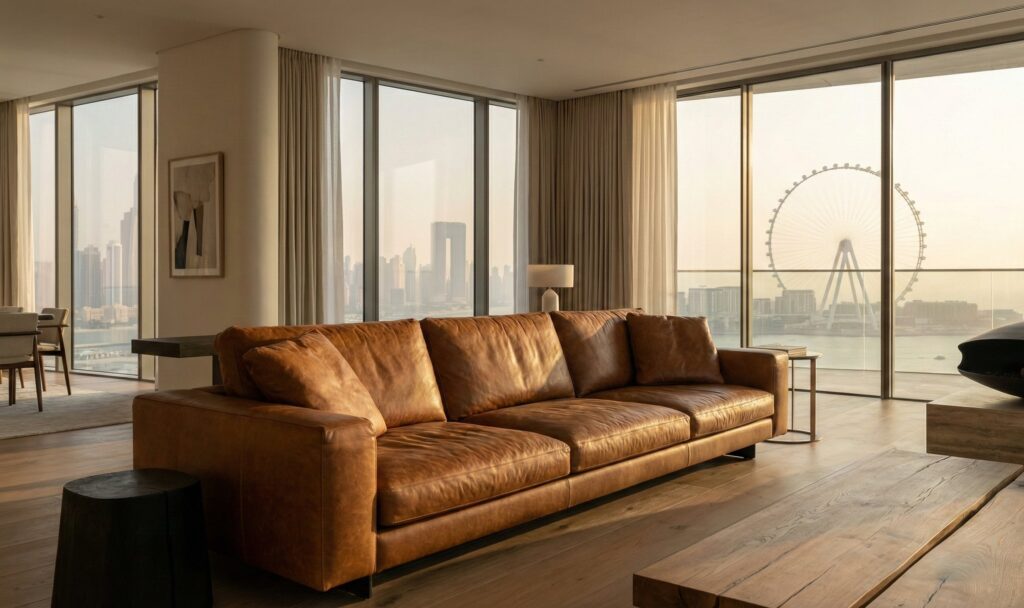
Deconstruction of the Showroom Price: MSRP vs. Reality
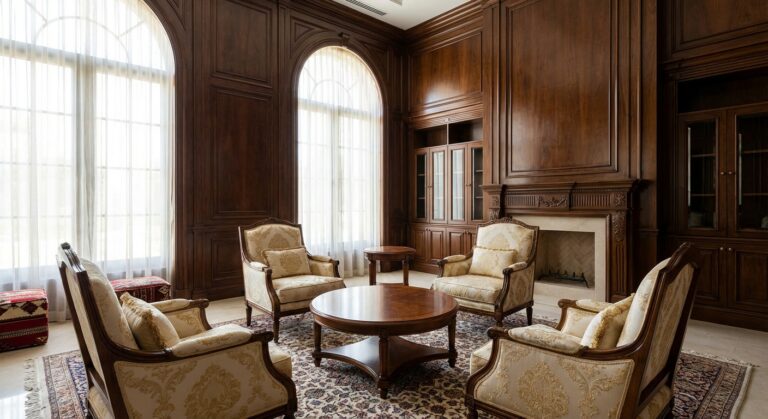
Look at the numbers. A Poltrona Frau ‘Chester One’ sofa has a Manufacturer’s Suggested Retail Price in Italy of, let’s say, €12,500. By the time it’s sitting under the lights at a local distributor like Aati, the price tag reads AED 85,000 (€21,250). That’s a 70% markup before it even leaves the store. Why? The distributor pays for prime retail space, massive inventory costs, and the salaries of salespeople. They aren’t running a charity. In the Dubai market, this means you are financing their entire operational overhead. The same logic applies to a B&B Italia ‘Charles’ sofa from Western Furniture, or a Minotti piece. The initial price you are quoted isn’t the cost of the furniture; it’s the cost of the local distribution model. The contractor won’t tell you that they often receive a kickback on this inflated price, a ‘project discount’ that’s just a fraction of the initial markup, making them appear to be a hero while the client still overpays. The reality is that this initial number is just the first of many financial setbacks. It doesn’t account for the fact that the specific full-grain leather shown on the floor model might not be the same one that complies with Dubai Civil Defence (DCD) fire codes for a commercial tower, requiring a costly custom order with an even higher margin and a six-month lead time that destroys your project timeline. It’s a calculated ambiguity.
The Logistical Gauntlet: Freight, Customs, and Material Degradation
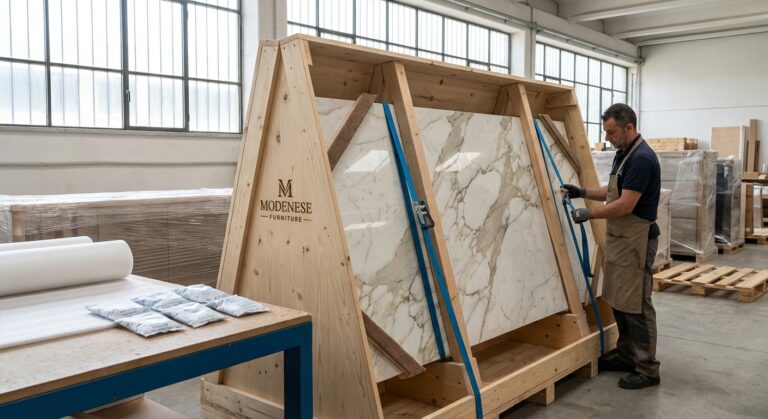
Here’s where it gets ugly. The journey from Meda, Italy, to Jebel Ali is a financial minefield. Your quote might include ‘shipping’, but it’s a conveniently vague term. Does it mean Free on Board (FOB), or Cost, Insurance, and Freight (CIF)? Is it a Full Container Load (FCL) or a Less than Container Load (LCL), where your precious cargo is consolidated with unknown goods, increasing risk of damage and delays? Let’s quantify. A standard 40-foot container from Genoa to Dubai costs roughly €7,000. Add insurance at 0.5% of the declared value. Then UAE Customs slaps on a 5% duty, followed by a 5% VAT on the total CIF value plus duty. Suddenly, a €100,000 order has accrued €17,850 in basic transit costs before it even hits the port. But it gets worse. High-gloss veneers, a staple of brands like Cassina, are exceptionally vulnerable. If they are not shipped in a climate-controlled container, the rapid shift from European temperatures to Dubai’s humidity can cause microscopic cracking and delamination, a defect that often only appears months after installation.

Who is liable then? The warranty is voided if the item is shipped improperly. The procurement model of a specialist firm like Solomia Home mandates climate-controlled transit and humidity-monitored staging facilities as a non-negotiable line item, a cost that seems high until you calculate the replacement value of a warped €20,000 credenza. Then there are the port fees, the ‘documentation handling’ charges, the transport from Jebel Ali to a warehouse, and the final delivery fee. Each step is another invoice. Another bleed.
Cost Analysis: Standard Distributor Quote vs. The Solomia Home Reality
| Metric/Feature | The Standard Distributor Quote | The Solomia Home Audited Reality |
|---|---|---|
| Base Cost (Ex-Works Italy) | €100,000 (MSRP often hidden) | €75,000 (Direct factory price) |
| Shipping & Insurance | €9,000 (Basic FCL, minimal insurance) | €12,500 (Climate-controlled, full replacement value insurance) |
| UAE Duties & VAT (5%+5%) | Calculated on inflated distributor cost base | €9,188 (Calculated on actual lower cost base) |
| Local Handling & Delivery | €3,500 (Often bundled with hidden markups) | €2,000 (Transparent, itemized cost) |
| Hidden Cost: DCD Compliance Failure | €15,000 (On-site fire treatment or replacement of non-compliant leather) | €0 (Materials specified compliant from factory, certified pre-shipment) |
| Total Landed Cost | ~€145,000+ (On a supposed €100k base) | €98,688 |
The Compliance Black Hole: DCD, DM, and Material Mismatches
This is where projects die. Not with a bang, but with a failed inspection report. The Dubai Building Code and regulations from Dubai Civil Defence are non-negotiable, yet they are an afterthought in most standard furniture orders. Case in point: a penthouse project in Dubai Marina specified several pieces of furniture with beautiful, soft, aniline full-grain leather. The items arrived, were installed, and promptly failed the DCD inspection because the leather lacked the BS 5852 Crib 5 fire certification required for multi-family high-rises. The options were catastrophic: either have a third-party company come on-site and apply a hideous, texture-ruining fire-retardant spray, or rip everything out and reorder, causing a six-month delay and doubling the cost. A specialist in Luxury Italian Furniture Procurement for High-End UAE Projects like Solomia Home resolves this at the specification stage, ensuring the correct fire-rated foams and treated leathers are used at the factory in Italy, with certificates issued before the container is even booked. The problem extends beyond fire codes.
Typical DCD Approval Failure Chain for a Hospitality Project:
- Initial specification is based on aesthetics, not local codes.
- Order placed with the European manufacturer who defaults to EU standards.
- Goods arrive in Dubai without DCD-required certificates of conformity.
- The main contractor’s compliance officer flags the items during site inspection.
- Project faces two disastrous choices:
- Attempt costly and often ineffective on-site remediation (e.g., fire-retardant sprays).
- Reject the items, leading to contractual disputes with the supplier and catastrophic project delays while compliant items are re-ordered.
- Final handover is delayed, invoking penalty clauses under the FIDIC contract.
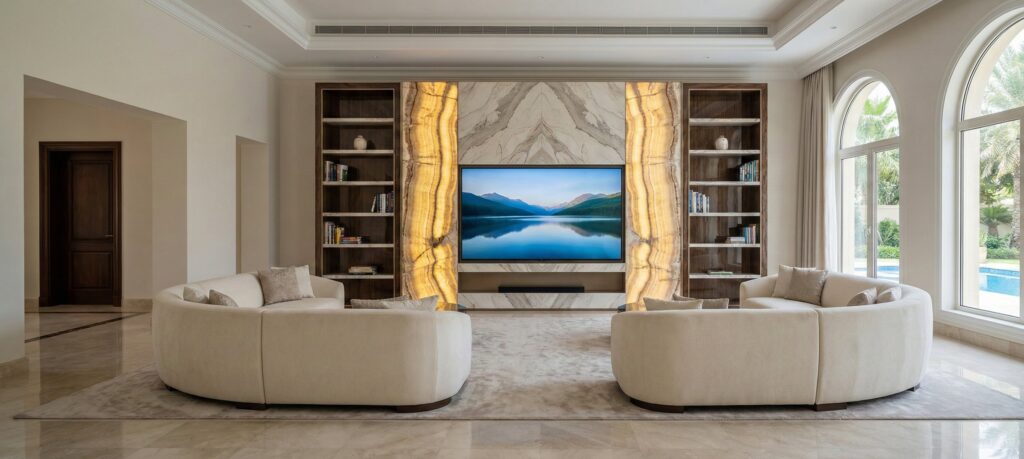
It’s not just fabrics. I saw a project where a massive, custom-built stone-and-steel media unit from a top Italian brand was specified for a living room. Nobody cross-referenced the weight with the structural drawings and the post-tensioned slab limits approved by Dubai Municipality (DM). The unit was craned in, and only then did the structural engineer raise the alarm. The potential for catastrophic structural failure was real. The piece had to be removed and completely re-engineered at a staggering cost. These are not edge cases; they are the predictable outcomes of a disconnected procurement process.
Frequently Asked Questions (The Unspoken Realities)
What’s the real impact of FIDIC contracts on furniture procurement?
It’s brutal. A standard FIDIC Red Book (Conditions of Contract for Construction) places the liability for all materials squarely on the main contractor. Faced with this risk, they will reject any furniture supplier, no matter how prestigious, who cannot provide ironclad documentation of compliance with all local codes (DCD, DM, etc.) upfront. They won’t risk their performance bond on your Minotti sofa. This forces you into their pre-approved, often-overpriced supply chain.
Can I just handle UAE Customs clearance myself to save money?
Honestly, don’t even think about it. The Harmonized System (HS) codes for furniture are complex. Classify a leather chair incorrectly and you’re not just facing a different duty rate; you’re facing a full physical inspection of the entire container. This can trap your shipment for weeks, accumulating thousands of dirhams in demurrage and storage fees at Jebel Ali Port, completely wiping out any potential savings and destroying your project schedule.
Why would DEWA (Dubai Electricity and Water Authority) care about my furniture?
DEWA cares about the electrical load. A sophisticated, custom-made media unit with integrated 4K screens, amplifiers, LED lighting, and cooling systems can represent a significant MEP (Mechanical, Electrical, Plumbing) load. If the interior designer specified this piece without consulting the MEP engineer, its power draw could exceed the capacity of the circuit allocated to that room in the DEWA-approved electrical plan. A final DEWA inspection can and will fail the fit-out until the electricals are upgraded, which may involve breaking open walls and is an absolute disaster at the final stage of a project.