Closet Organization Decisions That Actually Work for Shared Family Reach-In Closets
Should a shared reach-in closet get fixed shelves, an adjustable closet system, or better bins? The right choice depends on measurements, daily users, visibility, and what the household can reset without rebuying storage.
Shared family reach-in closet organization starts with measuring the closet and the people using it
Plan a shared family reach-in closet from measurements before choosing products. Width, usable depth, door type, rod height, shelf clearance, adult reach, child reach, and daily traffic decide what the closet can hold.
What closet measurements decide whether a reach-in closet can hold double hanging, shelves, or drawers?
Reach-in closets are often about 3 to 8 feet wide, 24 to 30 inches deep, and roughly 80 to 96 inches tall, but the door opening often matters more than the back wall. Adult shirts and jackets on standard hangers usually need about 24 inches of usable depth so sleeves do not rub the wall or door.
- Measure wall width and door opening separately. Sliding doors hide one side, bifold doors reduce edge access, and hinged doors need swing clearance.
- Check rod height. A single rod often works around 60 to 66 inches high. Double hanging usually needs a lower rod around 40 to 42 inches and an upper rod around 80 to 84 inches.
- Test shelf spacing with real items. Folded clothes often need 10 to 14 inches of height, bins may need 12 to 16 inches, and bulky storage may need more.
- Be cautious with drawers. Drawers need pullout room, so sliding doors and narrow openings can make built-in drawers frustrating.
Which family members need reachable closet zones every day?
Closet organization works better when daily users get the easiest space. Adults can use mid-to-upper rods and shelves, while younger children need low hooks, open bins, cubbies, or a low rod they can reach without climbing. High shelves should hold light, occasional items, not the basket a child needs every morning.
Fixed closet shelving works for stable storage, while an adjustable closet system works for changing family routines
Fixed closet shelving is best for predictable items such as linens, coats, uniforms, or labeled bins. An adjustable closet system is better when children grow, seasons rotate, shoe counts change, or two people need different heights over time.
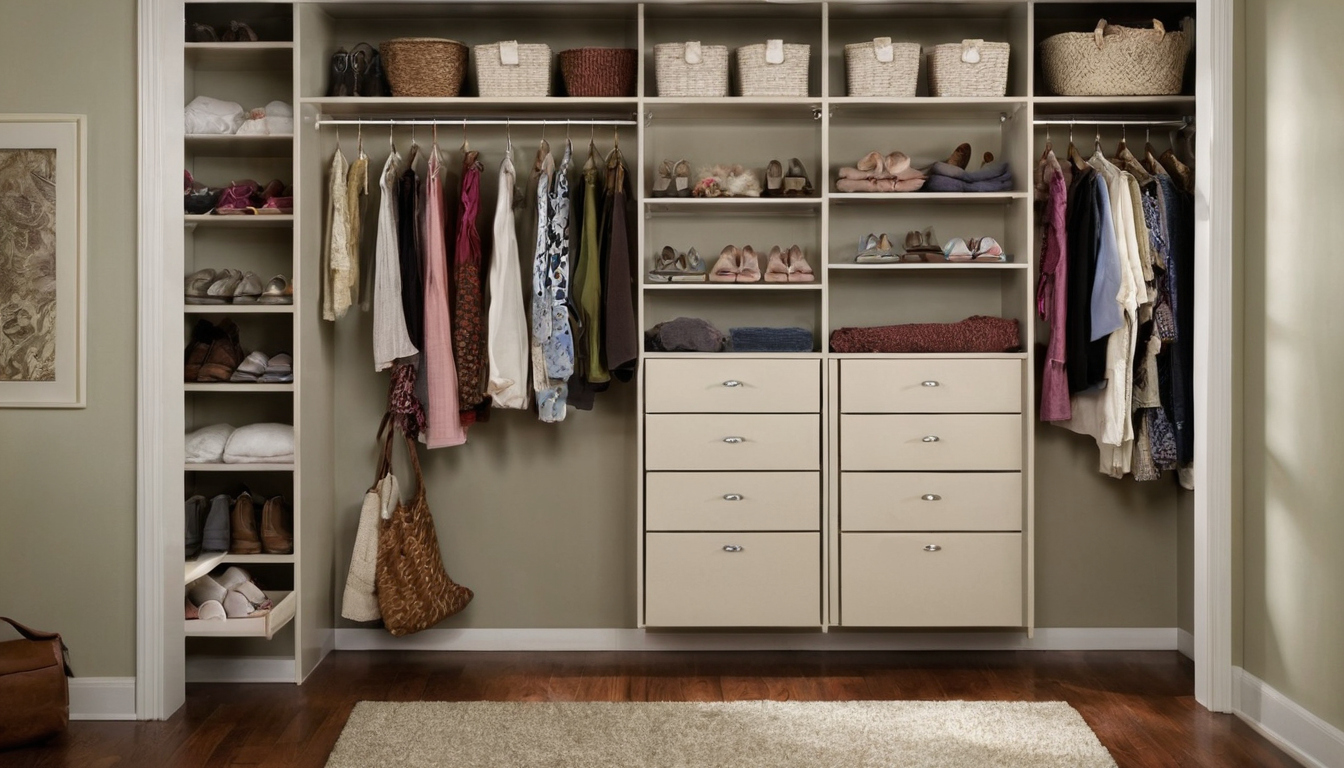
Fixed closet shelving works for stable storage, while an adjustable closet system works for changing family routines shown with practical context cues.
When is fixed closet shelving the smarter decision for a shared reach-in closet?
Fixed closet shelving makes sense when the household needs strength, simplicity, and fewer moving parts. Choose it when the same categories stay in the closet all year. Use shallow shelves for folded clothing and baskets, deeper shelves for bedding, and narrow shelves for shoes. Match shelf material to use: wire ventilates, laminate looks finished, solid wood handles wear when supported, and metal standards suit utility storage. Install heavier shelves into studs or proper wall anchors.
When is an adjustable closet system worth installing in a family reach-in closet?
An adjustable closet system earns its cost when the closet has to change without being rebuilt. Standards, brackets, rods, drawers, and movable shelves let a family lower a rod for a child, raise a shelf for boots, or swap hanging space for folded storage. Check manufacturer load ratings for every shelf, rod, bracket, rail, and anchor combination before storing heavy bins. Use freestanding, over-door, or tension organizers for rentals unless wall-mounted rails are allowed.
Shared closet hanging space should be changed only after counting short, long, and repeat-use clothing
A shared family reach-in closet should not lose hanging space just because shelves look neater online. The right rod layout depends on how many short garments, long garments, work items, school items, and repeat-use pieces must stay visible.
How should a family count clothing before changing closet rods?
Empty one rod section at a time and sort hanging items into short hang, long hang, repeat-use, occasional, and donate or relocate piles. Count shirts, blouses, jackets, uniforms, and folded-over pants as short-hang items. Count dresses, robes, long coats, and full-length jumpsuits as long-hang items. Measure the current rod space used, then check whether hangers slide freely.
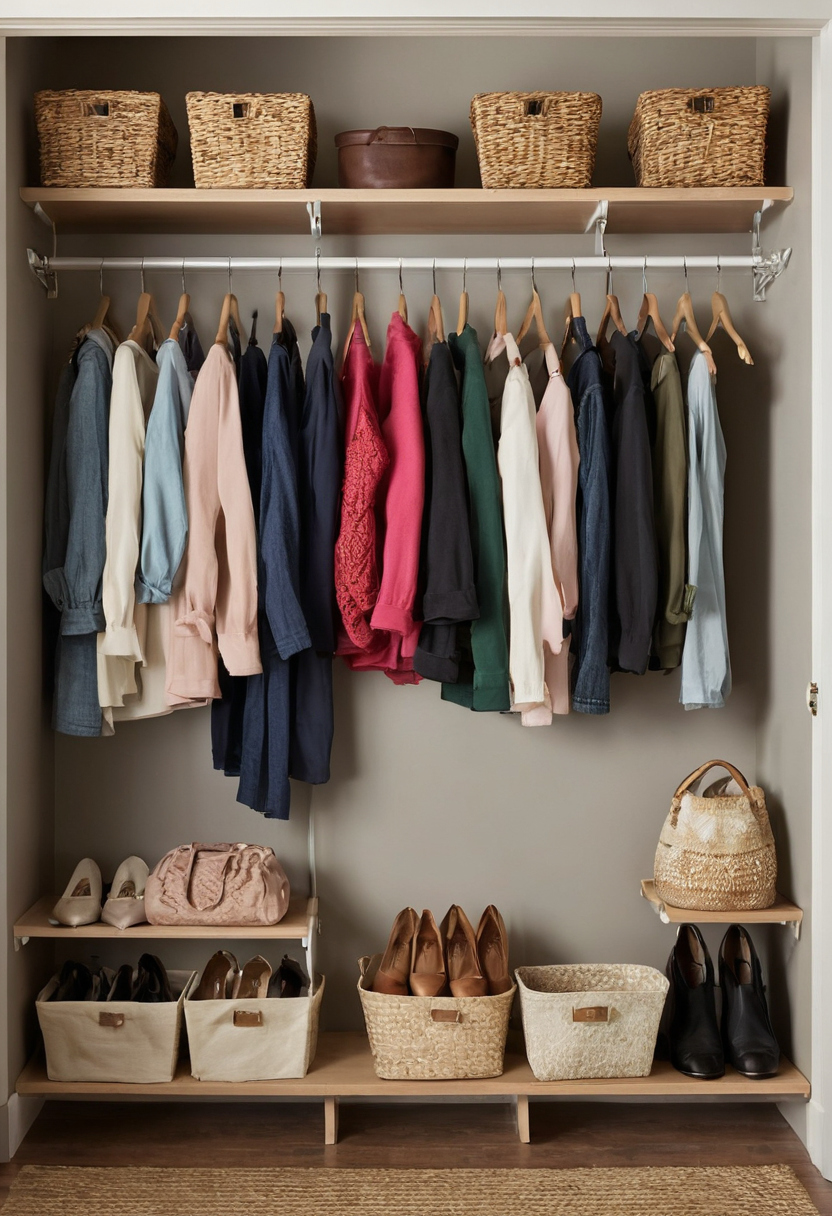
Shared closet hanging space should be changed only after counting short, long, and repeat-use clothing shown as an editorial planning reference.
The clothes worn most weeks deserve the easiest reach. If the closet has a dark corner, an ENERGY STAR qualified LED can help visibility while using at least 75 percent less energy than incandescent lighting under the stated qualified-product conditions.
When does double hanging make a small reach-in closet work better?
Double hanging works best when most clothing is short: shirts, kids’ clothes, folded pants, light jackets, and school uniforms. Many layouts place the upper rod around 80 inches high and the lower rod around 40 inches high, with roughly 36 to 42 inches of clearance for each short-hang zone. Double rods work poorly when the closet must hold dresses, long coats, bulky workwear, or a child’s daily items on the lower half.
A shoe organizer for closet use should match shoe count, door clearance, and daily visibility
A shoe organizer for closet storage works only when it fits the actual shoe count, closet depth, and door movement. Floor racks, cubbies, over-door organizers, stackable boxes, and tilted shelves solve different problems.
Which shoe organizer works best for a shared bedroom reach-in closet?
Adult shoes usually need about 8 to 10 inches of shelf width per pair, while boots need taller open space and children’s shoes can share smaller cubbies. A two-tier floor rack often holds 6 to 12 pairs. Stackable clear boxes improve visibility but eat depth. Over-door pockets work for flats, sandals, and kids’ shoes, but hinged doors need enough top, side, and knob clearance. For daily shoes, open storage usually beats lidded boxes.
When should shoes stay outside the shared reach-in closet?
Muddy cleats, wet boots, high-odor athletic shoes, and pet-tempting leather pairs usually belong in an entry, mudroom, garage, or laundry zone. If damp footwear wets carpet, shelves, liners, or nearby materials, the EPA advises that wet or damp materials and furnishings generally be cleaned and dried within 24 to 48 hours to help prevent mold growth.
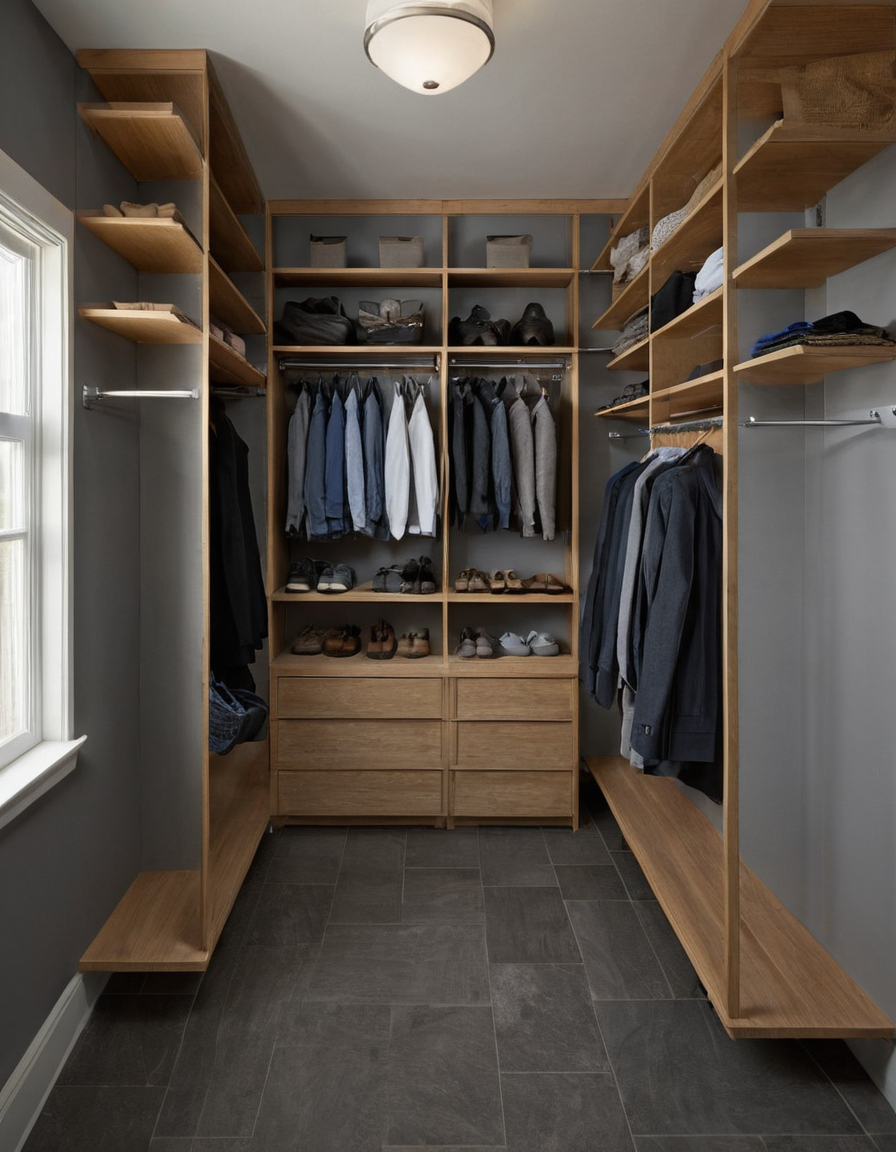
A shoe organizer for closet use should match shoe count, door clearance, and daily visibility shown as an editorial reference for proportion and finish coordination.
Small closet organization ideas work best when bins, baskets, and labels protect visibility instead of hiding clutter
Small closet organization ideas work best when shared items stay visible, reachable, and easy to reset. Bins and baskets should hold awkward, seasonal, or child-owned categories while everyday items stay open.
What should go in bins in a shared reach-in closet?
Bins work best for seasonal hats, sports extras, backup linens, school accessories, costume pieces, and small items that scatter across shelving. Clear bins suit high shelves because adults can see contents before lifting. Open baskets suit daily kid zones because a child can toss in gloves or hair bows without unstacking anything. Everyday work shirts, school uniforms, frequently worn sweaters, and damp shoes should not disappear into opaque bins.
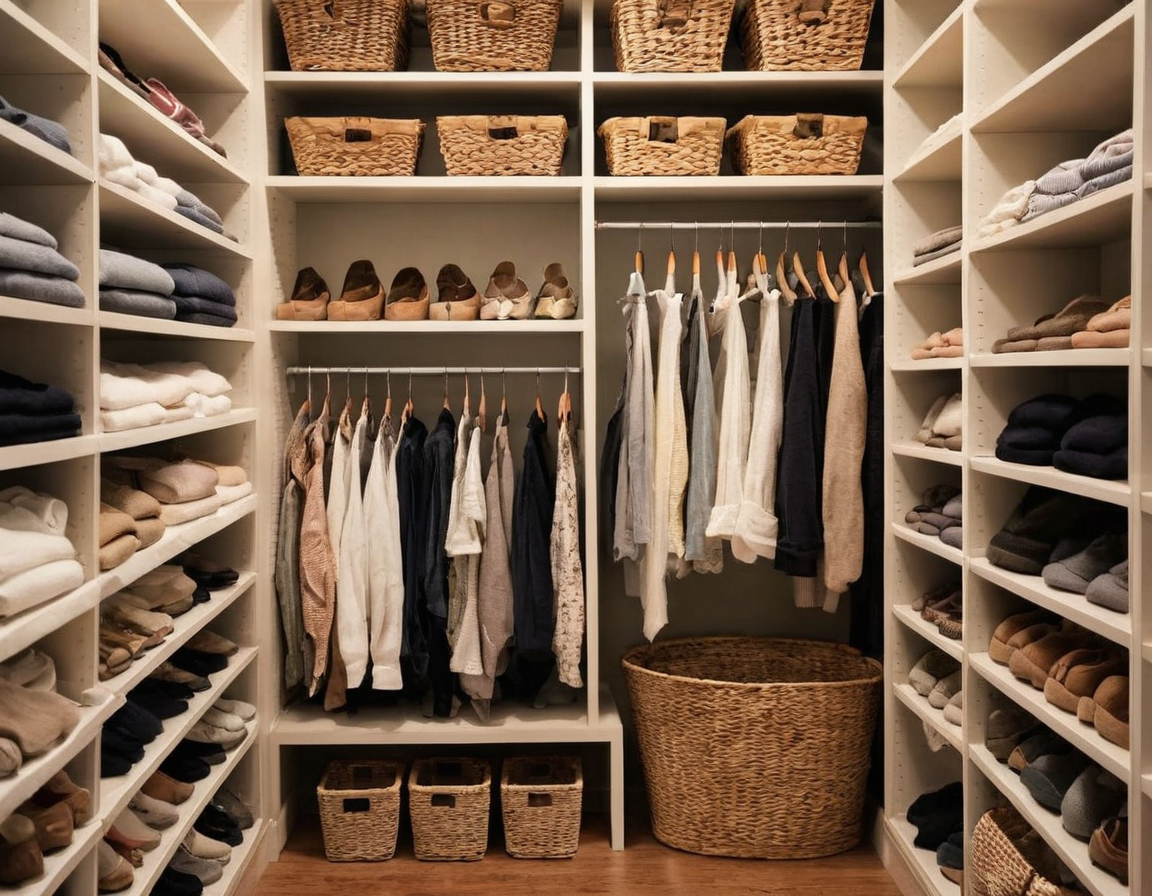
Small closet organization ideas work best when bins, baskets, and labels protect visibility instead of hiding clutter shown as an editorial planning reference.
How can labels make closet organization easier for a whole family?
Labels should tell each person where an item returns, not just where it looks tidy. Use word labels for adults, picture labels for young children, color labels for shared categories, and owner labels for siblings. Renters can use removable tags, clip-on label holders, or washable tape instead of adhesive on painted shelving.
Closet organization costs should be compared by permanence, material, load rating, and reset time
Closet organization costs are easiest to compare when the household separates removable organizers from installed components. A low-budget reset may solve visibility, while a midrange or permanent installation may solve load, durability, and daily access.
What closet organization upgrades belong in an under-$100 family reset?
An under-$100 reset should buy visibility, not construction. Slim hangers, shelf dividers, labeled bins, hooks, a basic shoe rack, or an over-door organizer usually fit this tier. Renters should favor over-door, tension, freestanding, and removable adhesive products.
When does a $100 to $500 closet system make better sense than buying more bins?
A $100 to $500 budget makes sense when the closet fails structurally: one rod is overloaded, the top shelf wastes space, or every bin must be moved to reach school clothes. DIY wire kits often cost less than laminate or modular kits, while drawers, towers, extra rods, and hardware raise the total. Check load ratings and anchoring instructions before buying.
When is a custom or semi-custom shared reach-in closet worth the higher cost?
Custom or semi-custom work is worth pricing for unusual dimensions, plaster walls, accessibility needs, heavy wardrobes, or a closet that affects resale. Ask about shelf material, future adjustability, warranty coverage, ventilation, and installation dust. The EPA notes that many VOC concentrations are consistently higher indoors than outdoors, so new finishes and composite materials deserve airing-out time in a closed bedroom closet according to EPA indoor air guidance.
The best shared reach-in closet plan includes installation risk checks and a simple family reset routine
A shared reach-in closet stays organized when the installation is safe and the routine is simple. Check wall structure, load limits, door movement, lighting, ventilation, child safety, and renter rules before drilling.
What are the common closet organization mistakes in shared family closets?
The most common mistake is buying more closet organization products before checking how the closet fails in daily use. Watch for overfilled rods, opaque bins for daily items, ignored door clearance, overloaded shelves, and unsafe low storage. Keep cleaning products, sharp accessories, heavy boxes, and climbable stacks out of child-access zones.
What is a practical rule of 3 for cleaning closets before organizing?
A practical rule of 3 is to sort every closet item into three decisions: keep in this closet, relocate to a better storage zone, or remove from the home. Keep daily clothing, current shoes, uniforms, bags, and accessories for the people sharing the closet. Relocate seasonal coats, guest bedding, memory items, bulky luggage, or tools using prime space. Remove outgrown clothing, damaged organizers, single shoes, empty packaging, and items no one chooses anymore.
The final closet organization decision is not the prettiest system; it is the safest plan the household can reset quickly and repeat without starting over.