How much weight can a wire closet shelving system hold before it sags?
Most homeowners assume a wire shelf fails because the steel bends. The steel rarely bends first. A standard 12-inch ventilated wire shelf made from welded steel wire resists bending far better than the surrounding wall assembly resists tearing. The fastener pulls out of the drywall, or the span exceeds the bracket rating, long before the shelf itself yields. Thinking of closet shelving as a structural system rather than a simple organizational surface changes how you load it during a move. See also: pantry cabinet load capacity.
Contents
- How much weight can wire closet shelving support per linear foot?
- Why do wire shelves sag and how is deflection measured?
- How far apart should wire shelf supports be installed?
- How does melamine particleboard compare to wire for closet shelving load limits?
- What are the failure risks when loading a closet system during a move?
Key takeaways
- Standard 12-inch-deep ventilated wire closet shelving supports 40 to 75 pounds per linear foot when mounted to wood studs at 16-inch centers using manufacturer-specified fixed-mount brackets.
- Wire shelves sag when the applied load exceeds the steel wire's yield strength across the unsupported span, causing permanent plastic deformation.
- Support brackets for wire closet shelving must be installed at a maximum of 16 inches on center when anchored into standard wood wall studs.
- Melamine particleboard closet shelving holds approximately 30 to 40 pounds per linear foot before noticeable sagging occurs at spans exceeding 30 inches without a center support.
- Loading a closet system rapidly during relocation concentrates dynamic forces that exceed static load ratings, risking sudden bracket pull-out or shelf collapse.
How much weight can wire closet shelving support per linear foot?
Standard 12-inch-deep ventilated wire closet shelving supports 40 to 75 pounds per linear foot when mounted to wood studs at 16-inch centers using manufacturer-specified fixed-mount brackets. Exceeding this uniform load, widening the support span beyond 16 inches, or relying solely on drywall anchors causes measurable deflection and eventual bracket pull-out. For related context, see pantry cabinet load capacity.
A point load concentrates force on a small area. Set a 40-pound moving box directly in the center of a 36-inch unsupported span, and all that force lands on two or three horizontal wires instead of spreading across the full bracket schedule. Point loads bend the wire grid locally and multiply the downward shear force on the nearest bracket. During relocation, dense boxes create point loads that exceed the bracket pull-out threshold even if the total shelf weight remains under the maximum linear rating.
The front edge of the wire shelf also determines span limits. Shelving with a thicker front wire resists bowing over longer distances than budget profiles with uniform thin wire across the entire depth. If your existing closet system lacks a center bracket on a span wider than 36 inches, add one before loading heavy items.
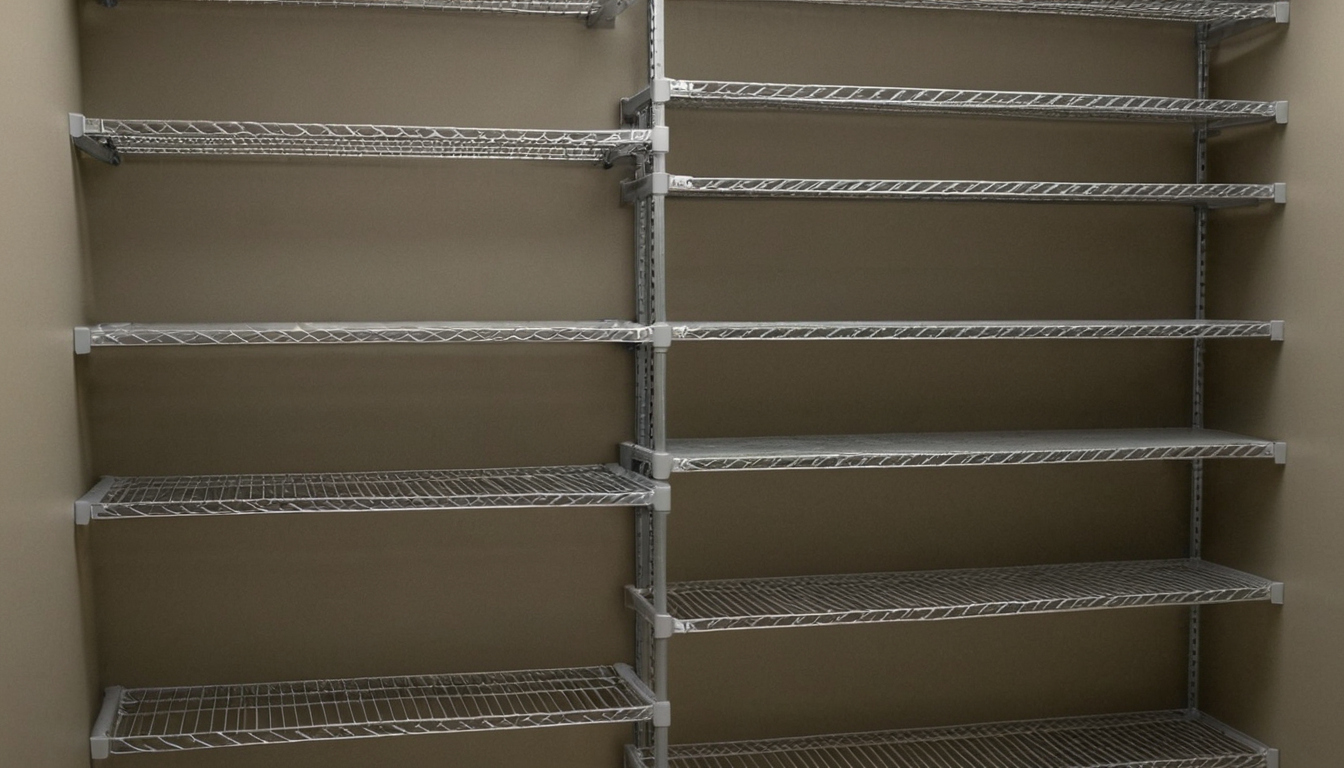
How much weight can wire closet shelving support per linear foot.
Why do wire shelves sag and how is deflection measured?
Wire shelves sag when the applied load exceeds the steel wire’s yield strength across the unsupported span, causing permanent plastic deformation. Deflection is the downward displacement at the span center; industry standards typically limit acceptable deflection to span divided by 360 under rated load to prevent visible bowing and hardware stress.
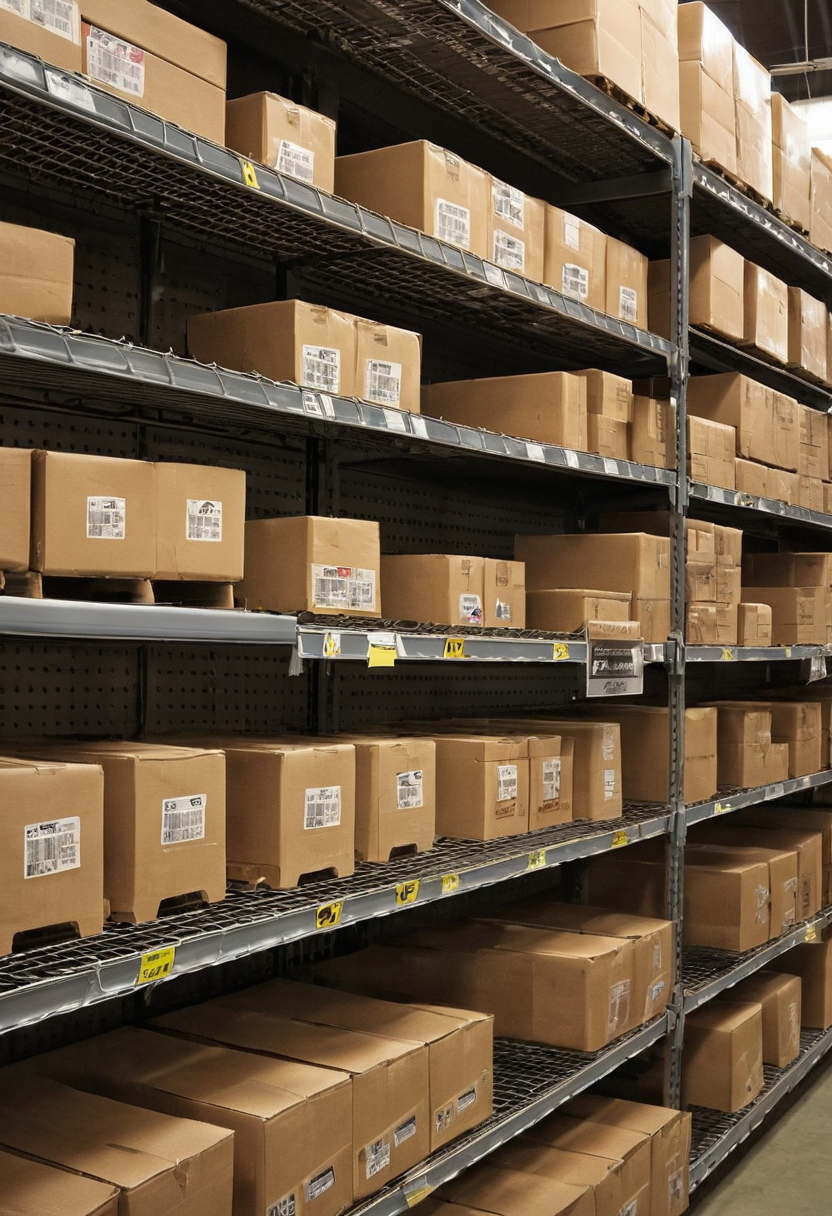
Why do wire shelves sag and how is deflection measured.
Plastic deformation means the low-carbon steel wire bends past its elastic recovery point and stays bent. Standard ventilated closet shelving uses an 11-gauge front wire for stiffness, with thinner 12-gauge or 13-gauge cross wires welded behind it. The shelf keeps its shape only while the total force remains below the yield threshold of that specific gauge combination.
The L/360 deflection limit marks the boundary between temporary flex and structural failure. A 36-inch wire shelf span should not deflect more than one-tenth of an inch under its rated uniform load. Once downward movement crosses that ratio, the bracket slots begin to torque against the drywall anchors, transferring a bending moment the fastener was never designed to carry. Steel rarely snaps in residential closets. Fasteners pull out first. That sequence makes correct support spacing the constraint governing your closet system.
How far apart should wire shelf supports be installed?
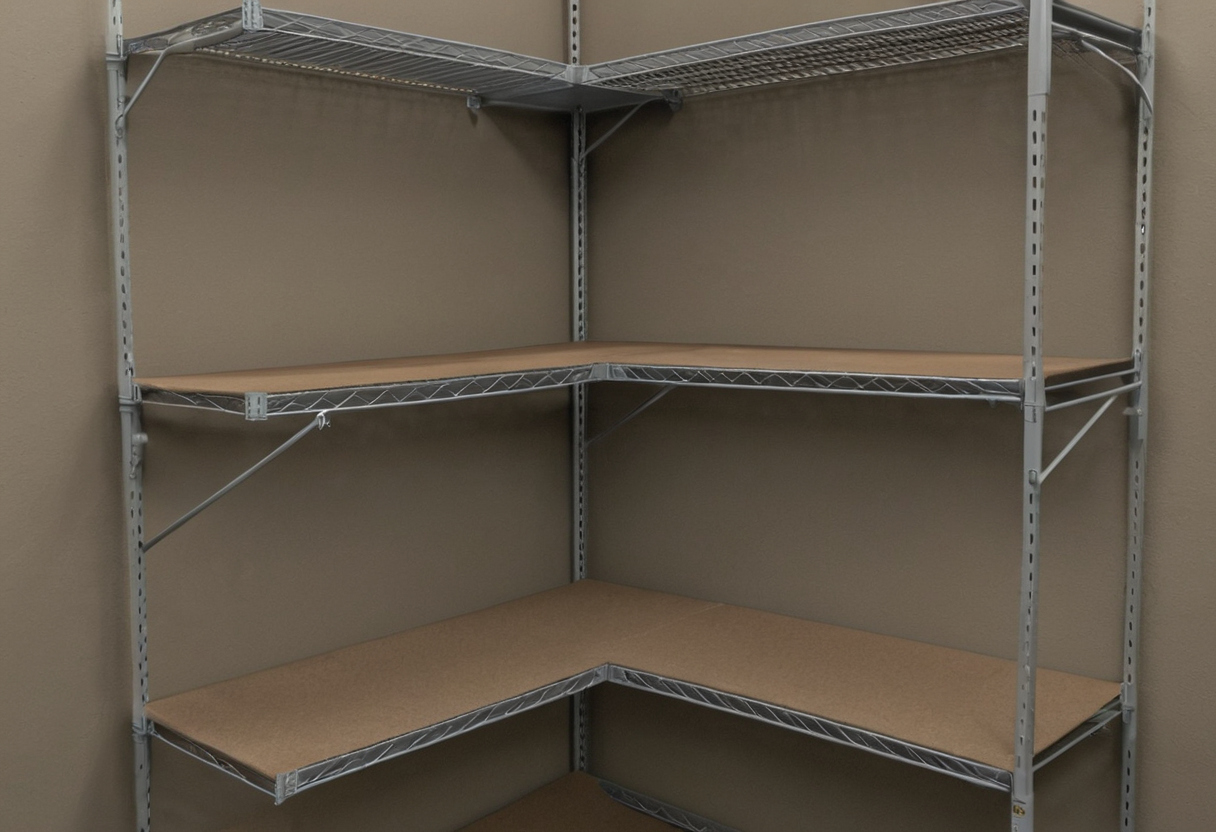
Support brackets for wire closet shelving must be installed at a maximum of 16 inches on center when anchored into standard wood wall studs. For heavier loads exceeding 50 pounds per linear foot, reducing the bracket spacing to 12 inches on center or upgrading to heavy-duty fixed-mount brackets prevents mid-span deflection and anchor failure.
ClosetMaid installation standards specify 16-inch on-center bracket spacing for standard-duty ventilated wire shelving in residential closets. Heavy-duty configurations carrying dense storage bins require 12-inch spacing or continuous front rail support to spread the load across multiple framing members. Elfa ventilated shelf systems follow a similar structural logic: their planning guide mandates that bracket spacing never exceed the distance between wall studs, which is typically 16 inches on center in North American framing. The Elfa system transfers weight through vertical hang standards screwed directly into studs rather than relying on independent shelf clips alone.
How far apart should wire shelf supports be installed.
A proper fastener schedule sets the mechanical connection between the bracket assembly and the wall structure. Mounting screws for wood stud applications must be #8 or #10 wood screws driven at least 1.5 inches into solid pine or fir framing. Drywall screws lack the shear strength required for sustained static loads and will snap under the cyclic stress of boxes being loaded and unloaded during a weekend move. Every screw must penetrate the center of the stud to avoid splitting the lumber edge.
A 4-foot span of wire shelving loaded to 60 pounds per linear foot generates 240 pounds of downward force. That force creates outward pull on the top fasteners. Two toggle bolts rated at 60 pounds each will fail catastrophically under that load, tearing through the gypsum core and dropping the entire shelf assembly. If your closet lacks accessible studs at the required intervals, install a horizontal wooden cleat spanning multiple studs first, then mount the shelf brackets to the cleat.
How does melamine particleboard compare to wire for closet shelving load limits?
Melamine particleboard closet shelving holds approximately 30 to 40 pounds per linear foot before noticeable sagging occurs at spans exceeding 30 inches without a center support. Unlike welded wire grids, particleboard creeps under sustained static loads. A shelf holding heavy boxes over a weekend relocation will therefore permanently deform faster than ventilated steel.
Creep is the slow, irreversible bending of composite wood fibers under constant weight. A 5/8-inch or 3/4-inch melamine shelf rated for 40 pounds per linear foot may hold that load briefly during installation, but leaving moving boxes on it for 48 hours compresses the internal resin bonds. The shelf sags past the acceptable L/360 deflection limit and stays bent after you unload it. Ventilated wire shelves resist this specific failure mode because cold-drawn steel returns to its original shape once the load is removed, provided the fasteners hold.
The 30-inch center-support threshold exists because standard particleboard lacks the tensile strength to bridge wider gaps under heavy static weight. Any span beyond 30 inches requires a vertical support pole or an additional bracket screwed directly into a wall stud. Composite wood materials also raise air quality considerations during installation in enclosed spaces. The U.S. Environmental Protection Agency states that volatile organic compounds are emitted as gases from certain solids or liquids, including building materials and furnishings, and indoor concentrations are consistently higher than outdoors. Unventilated reach-in closets concentrate these emissions when freshly cut melamine edges are exposed.
Wire shelving remains the correct choice for damp environments, utility closets, or garages where airflow prevents moisture damage. Panel systems suit dry bedroom closets where folded clothes and shoeboxes sit flat. Consider these material constraints alongside your shared reach-in closet layout decisions to determine whether the system handles dual-user loads without mid-span deflection.
What are the failure risks when loading a closet system during a move?
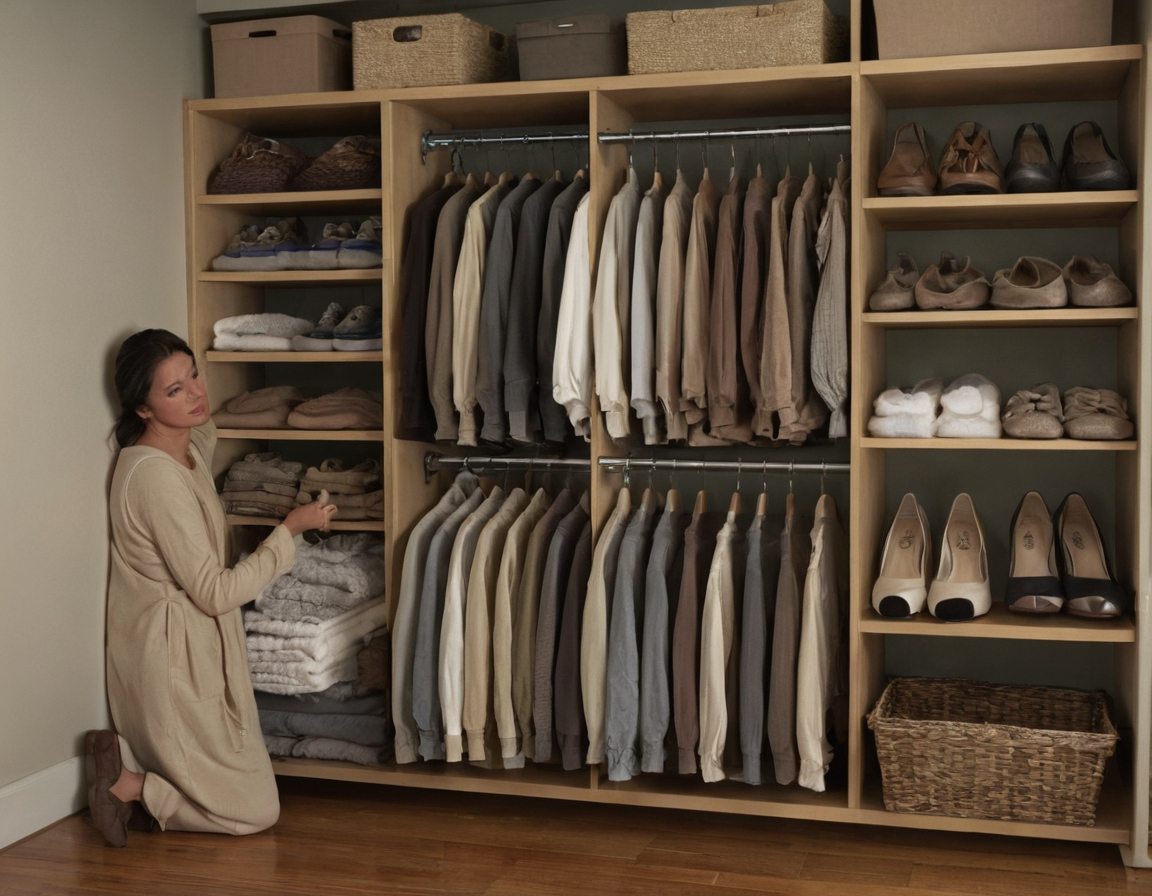
Loading a closet system rapidly during relocation concentrates dynamic forces that exceed static load ratings, risking sudden bracket pull-out or shelf collapse. To load it safely, distribute heavy moving boxes across multiple shelves, place the densest items on bottom cleats or floor-standing supports, and verify that all wall fasteners engage solid framing.
What are the failure risks when loading a closet system during a move.
For more on this topic, see other guides on this site.